









Product Technology
Does Dry Ice Cleaning Really Remove Carbon Deposits from Cars?
A darkened throttle body, carbon buildup on intake valves, and stubborn grime in the engine bay can all be difficult to clean. Conventional methods may involve chemical cleaners, brushing, or removing parts. Dry ice cleaning offers another option: compressed air propels dry ice pellets toward the surface to loosen deposits.But does dry ice cleaning really work on automotive carbon deposits?
Yes, it can remove carbon deposits and oily buildup from suitable surfaces that the nozzle can reach. It can be useful for cleaning throttle bodies, accessible intake valves, certain engine components, engine bays, and undercarriages. Its appeal goes beyond the visible result: the process uses no wash water, generally requires no chemical cleaner, and leaves no blasting media behind after the dry ice sublimates.
Results still depend on where the deposits are, how thick they are, the material being cleaned, the equipment settings, and the operator’s technique. Dry ice cleaning is a professional cleaning method; it cannot resolve every engine problem.
What Is Automotive Dry Ice Cleaning?
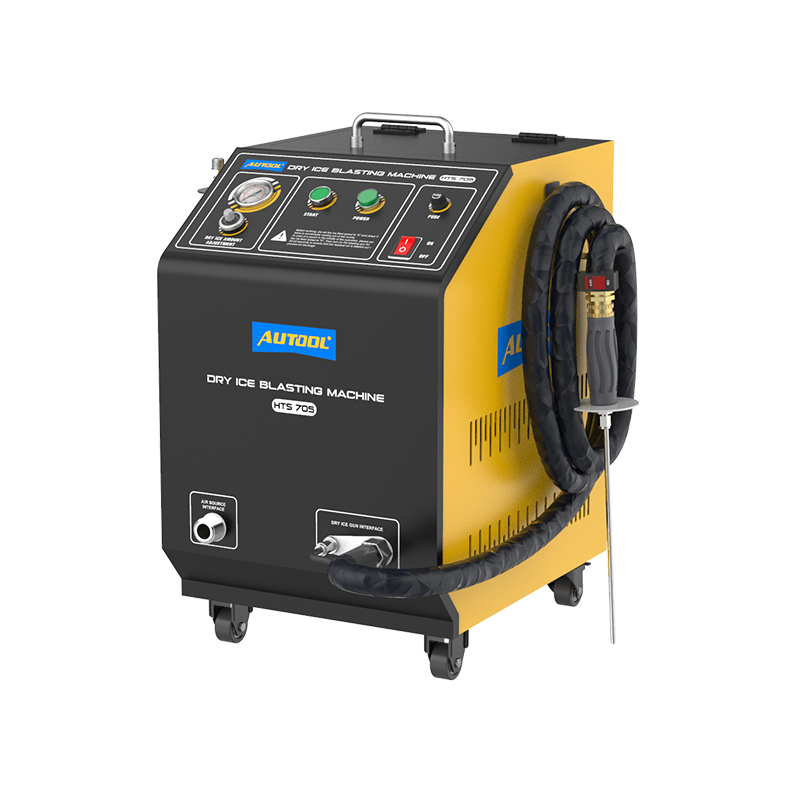
Dry ice is solid carbon dioxide. A dry ice blasting machine uses compressed air to propel small dry ice pellets onto the surface being cleaned.
The process works through three effects:
Impact: Fast-moving pellets strike the deposits and help loosen carbon, grease, and grime.
Low temperature: Dry ice, at approximately −78.5°C (−109.3°F), can make some deposits brittle and weaken their bond with the surface.
Sublimation: On impact, the dry ice rapidly changes from a solid to a gas, helping lift loosened contamination.
Because the pellets sublimate, there is no spent blasting media to collect. The removed carbon, grease, and other debris still need to be contained and cleaned up.
What Are the Benefits of Dry Ice Carbon Cleaning?
Visible, Controlled Removal
Dry ice blasting acts directly on surface deposits. When cleaning reachable carbon buildup, grease, and grime, an operator can observe the result and adjust the air pressure, dry ice feed rate, nozzle distance, and angle as needed.
The process also makes before-and-after results easier to document with photographs or an inspection camera. This helps a workshop show customers what was cleaned.
A Dry Process with Less Liquid Residue
Dry ice turns into gas, so the blasting media itself leaves no wash water behind. This makes the method attractive for engine bays, areas near wiring, and components with complex shapes.
“Dry” does not mean every electrical connection can be blasted at close range. Loose connectors, aging wiring, and materials sensitive to low temperatures should be inspected and protected before work begins.
Less Secondary Cleanup
Dry ice does not turn into wastewater or leave abrasive grit behind. After cleaning, the workshop mainly needs to collect the carbon, oil, and debris removed from the vehicle.
This can reduce the time spent rinsing, drying, or clearing blasting media from crevices. Total job time still depends on the cleaning area, the amount of contamination, preparation, and vehicle design.
Multiple Automotive Applications
Beyond carbon deposits, dry ice cleaning may be suitable for:
Throttle bodies, accessible intake valves, and certain engine components;
Oil and stubborn grime in engine bays;Undercarriages, transmission housings, suspension parts, and wheel arches;
Wheels, the exterior surfaces of brake components, and some rubber parts;
Classic car restoration, used vehicle reconditioning, and detailing.
A note on rust: Dry ice blasting may remove loose, flaky surface rust, but it is not a complete solution for firmly bonded or deeply pitted corrosion. It does not prepare a metal surface in the same way as abrasive blasting.
These applications make dry ice cleaning useful both as a carbon cleaning method and as a potential service offering for repair and detailing shops.
When Is Dry Ice Cleaning Worth Considering?
After inspecting the vehicle, a workshop may consider dry ice cleaning when:
Visible deposits have built up on a throttle body or accessible intake valves;
Conventional wiping cannot easily reach a complex shape or narrow area;
An engine bay or undercarriage has stubborn oily grime, but using substantial amounts of water is undesirable;
A classic or high-value vehicle calls for detailed cleaning with less liquid and blasting-media residue;
The workshop wants to document the condition before and after cleaning.
On some gasoline direct injection engines, fuel does not continually wash over the backs of the intake valves as it does on port injection engines. Intake valve deposits may therefore deserve closer attention. The decision to clean should still be based on the vehicle’s condition, fault codes, idle quality, performance, and inspection findings—not mileage alone.
Is Dry Ice Blasting Safe?
Dry ice cleaning uses no liquid wash water, but it is still a professional blasting process. A well-managed job should include:
Choosing suitable pressure, dry ice feed, nozzle distance, and nozzle type for the material and deposits;
Protecting intake openings, exposed oil passages, and other areas where debris must not enter;
Inspecting aged plastics, coatings, wiring, seals, and materials sensitive to low temperatures;
Wearing eye protection, insulated gloves, and hearing protection;
Providing adequate ventilation and collecting the removed debris.
Carbon dioxide can accumulate in poorly ventilated spaces and create an oxygen-deficiency hazard. Direct skin contact with dry ice can also cause cold burns. The work should be carried out by trained operators with appropriate equipment and ventilation.
Conclusion: Precise Cleaning with Less Blasting-Media Residue
Dry ice carbon cleaning is a practical option for reachable deposits and stubborn surface grime. Its strengths include visible physical cleaning, a dry process, no spent blasting media, and adjustable operation. These qualities can make it valuable in vehicle maintenance, detailing, and reconditioning where careful cleaning matters.
Before choosing the service, confirm which deposits the nozzle can reach, whether the materials are suitable, and how the workshop will set up ventilation and debris collection. The right equipment and a skilled operator are what make the method effective.
If you would like to learn more about dry ice cleaning to remove carbon deposits, please contact us directly using the contact information below.
seller@Mr car tool.net
+86 189 2376 8146
