






Product Technology
Pressure Brake Bleeding vs. Manual Pedal Bleeding: How to Choose the Right Brake Fluid Exchange Method?
Brake fluid replacement is a critical automotive maintenance task. For repair shops, choosing the right fluid exchange method directly impacts job quality, staffing efficiency, and bay throughput.
What are the differences between traditional manual pedal bleeding and pressure fluid exchange? How should shops make the right choice? It can be evaluated through operating procedures, business demands, and equipment specifications.
1. Manual Pedal Bleeding: Low Investment, High Coordination Required
Manual pedal bleeding relies on pressing the brake pedal to utilize the hydraulic pressure generated by the master cylinder to purge brake fluid from the bleeder screw. This standard procedure typically requires a two-person team: one technician depresses and holds the brake pedal, while the other operates the bleeder screw and monitors the fluid level in the reservoir.
This method requires minimal investment in specialized equipment. When performed according to proper procedures and vehicle repair guidelines, it successfully completes the fluid flush and air bleeding.
However, the manual method requires repeated pedal pumping, demanding precise synchronization between pressing, holding, and bleeding. For shops handling a high volume of fluid flushes, dedicating two technicians per job ties up labor, and the workflow efficiency remains subject to communication and technician experience.
2. Pressure Fluid Exchange: Automated Supply, Reduced Manual Pumping
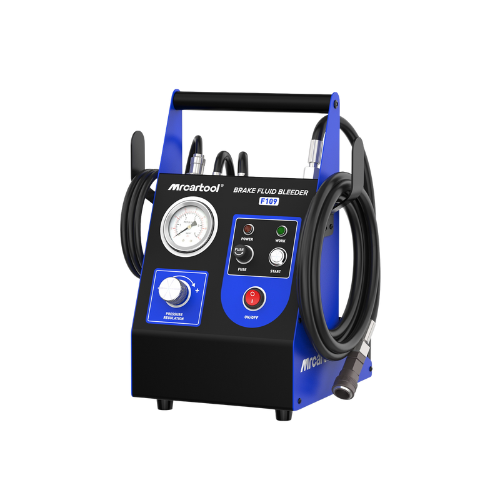
Pressure brake fluid exchange equipment connects directly to the vehicle’s master cylinder reservoir via specialized adapters, supplying new brake fluid under controlled pressure while pushing out old fluid and trapped air through the bleeder screws.
Provided the vehicle repair procedure allows it, this method significantly reduces repetitive manual pumping and minimizes reliance on two-person teams, making routine fluid service easier to schedule for single technicians.
Before operation, technicians must verify adapter fitment, ensure a tight seal, and calibrate the pressure according to vehicle service specifications. Excessive pressure can damage the reservoir or cause the adapter connection to pop off, so always strictly adhere to OEM pressure guidelines.
3. Higher Service Volume Justifies a Focus on Staff Efficiency
If your shop frequently performs brake fluid replacements, investing in pressure exchange equipment is worth serious consideration. Reducing repetitive pumping and labor coordination allows technicians to manage their workflow more conveniently.
For lower-volume shops working on vehicles that allow manual bleeding, standard manual operation remains a viable approach. When purchasing equipment, evaluate your decision based on your most common vehicle models, staffing structure, adapter coverage, and budget.
Regardless of the method chosen, always follow the vehicle’s specified brake fluid type and bleeding sequence. Certain ABS and ESP systems may also require a scan tool to perform specific electronic bleed procedures during major services or when air has entered the system.
4. Selecting a Brake Fluid Exchanger: Evaluate Features and Build Quality
Taking the MRCARTOOL F106S Pulsating Brake Fluid Exchanger as an example, features such as pulsating fluid exchange, smart fluid level monitoring, and system air purging are key functions for shop owners to evaluate.
The smart fluid level monitoring system automatically stops fluid delivery when the new fluid supply is low, preventing the risk of running dry mid-service. The automated air-purging feature makes it easy to clear air from the machine and supply lines prior to connecting to the vehicle, ensuring the system is primed and ready.
Additionally, the F106S features a 304 stainless steel body, offering excellent corrosion resistance, easy daily cleaning, and a durable metallic finish. For equipment stored long-term in service bays and constantly exposed to oil, fluid, and moisture, chassis material is a vital detail when shopping.
When purchasing online, inspect product detail photos, operational videos, and included adapter lists. Consult customer service with your shop’s most frequent vehicle models to confirm adapter compatibility, machine dimensions, and operating requirements.
After completing the fluid flush, always perform final checks on fluid level, sealing integrity, and brake pedal response as outlined in vehicle repair guidelines. If the pedal feels excessively soft or has prolonged travel, continue troubleshooting and resolve the issue according to manufacturer guidelines.
Conclusion
Start with OEM requirements, align your fluid exchange method with shop business demands, and pair suitable equipment with standardized procedures to ensure every brake fluid service is efficient and methodical.
