






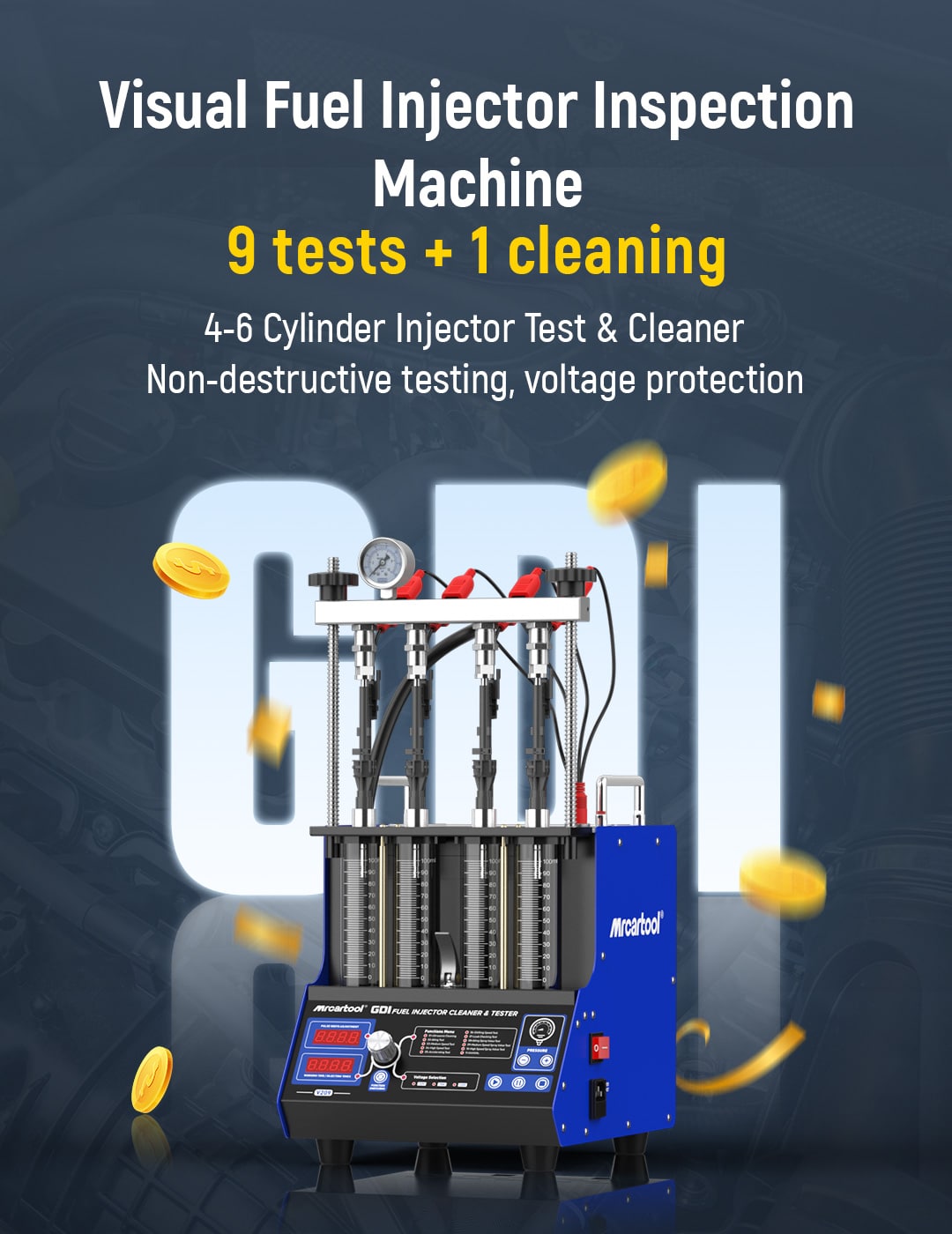
Product Technology
Has Your Car’s Fuel Consumption Suddenly Increased? The Fuel Injectors May Be Sending a “Silent Warning”
You drive the same commuting route and maintain the same driving habits, yet each tank of fuel seems to last less and less. The engine occasionally shakes while idling at a red light, and acceleration no longer feels as smooth as it used to. If these symptoms appear together, the fuel injectors should be included in your diagnostic checklist.Fuel injector cleaning and testing can help identify certain fuel-injection problems. However, increased fuel consumption does not necessarily mean that the injectors are clogged. Identifying the cause before choosing the appropriate solution helps prevent you from paying for a cleaning service that fails to solve the actual problem.
What Is a Fuel Injector, and Why Does It Affect Fuel Consumption?
A fuel injector acts as the engine’s “fuel atomizer.” It sprays high-pressure gasoline into extremely fine droplets so that the fuel can mix thoroughly with air and burn efficiently.It is more than a simple on-and-off valve. The injector is responsible for delivering the correct amount of fuel with the proper spray pattern, atomization, and consistency.The better the atomization, the more completely the fuel burns—and the farther the vehicle can travel on the same amount of gasoline. When atomization deteriorates, some fuel may not burn completely before being expelled through the exhaust, resulting in increased fuel consumption.
How Carbon Deposits Cause Fuel Injectors to Send a “Silent Warning”
Restricted injector holes: Gum, deposits, and impurities in gasoline can carbonize under high temperatures and accumulate around the injector holes. This reduces the effective spray area and fuel flow. To maintain engine output, the ECU may compensate by extending the injection duration.
Poor atomization: Carbon deposits make the edges of the injector holes uneven. Instead of producing a fine, uniform mist, the injector may spray coarse droplets or even a stream of fuel, leading to incomplete combustion.
Seal leakage: If the needle valve does not close properly, fuel may drip into the cylinder while the engine is idling. This can cause rough idling and increased fuel consumption after the engine warms up.
When these three issues combine, the result may include higher fuel consumption, reduced engine power, strong exhaust odors, and rough idling. Carbon deposits develop gradually, so injector problems also tend to appear quietly. By the time the symptoms become obvious, the injectors may have been restricted for some time.
Six Warning Signs of Fuel Injector Problems
1. Fuel consumption suddenly increases even though driving conditions and habits have not changed.
2. The engine is difficult to start when cold, or it idles unevenly and shakes.
3. Acceleration feels weak, and throttle response becomes slower.
4. The exhaust smells unusually strong, or the vehicle emits black smoke.
5. The exhaust produces mild popping or backfiring sounds.
6. The check-engine light comes on, and diagnostic trouble codes indicate that the air-fuel mixture is too rich or too lean.
These symptoms can also be caused by faulty spark plugs, oxygen sensors, incorrect fuel pressure, and other problems. A systematic diagnosis should be performed before concluding that the fuel injectors are at fault.
Can a Pour-In Cleaner Be Used Directly on GDI Vehicles?
The short answer is that pour-in, non-removal fuel-system cleaners may provide some benefit for light deposits. However, the situation is considerably more complicated for today’s widely used gasoline direct-injection (GDI) engines.
GDI injectors spray fuel directly into the combustion chamber. They operate at higher temperatures and pressures and have smaller injector holes. Once carbon deposits form, they are often harder and more difficult to remove.
Because non-removal cleaning additives travel through the fuel system, their ability to penetrate heavily carbonized deposits may be limited. Their effectiveness can therefore be reduced. If larger pieces of carbon break loose, there may also be a risk of secondary damage.
A more thorough approach is to remove the injectors and clean them ultrasonically with a dedicated cleaning solution. This helps dislodge deposits from the injector holes and filters. The injectors can then be pressure-tested to verify their spray pattern and flow rate. This is also a common professional procedure for repair shops dealing with complaints about increased fuel consumption.
Recommended Procedure: Test First, Clean Second, and Verify the Results
1. Connect a diagnostic scanner and read the fault codes and long-term fuel-trim data to determine whether the injection system should be a primary suspect.
2. Remove the injectors and test their sealing performance, spray pattern, and flow consistency to identify the affected cylinder or injector.
3. Use ultrasonic cleaning with a dedicated cleaning solution to remove internal deposits.
4. Retest the injection volume, spray pattern, and sealing performance to confirm the results.
5. Replace the seals when necessary, reinstall the injectors using the specified torque, and perform a road test and final inspection.
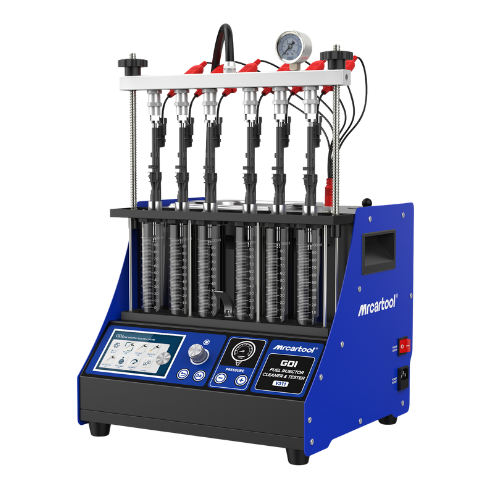
Product Recommendation: MRCARTOOL V311 Six-Cylinder GDI Fuel Injector Tester and Cleaner
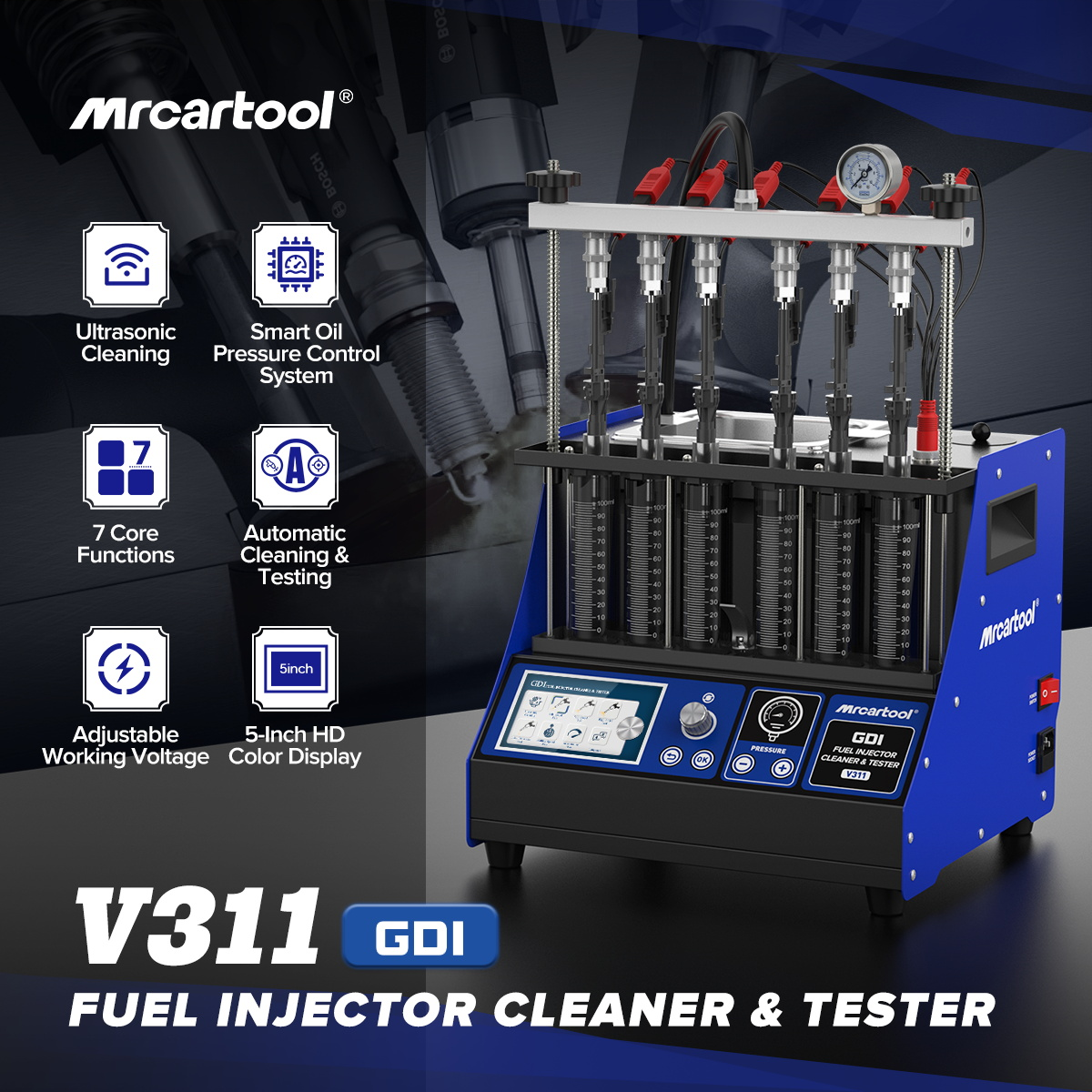
If you operate an automotive repair shop, specialist workshop, used-car reconditioning business, or fleet-maintenance facility, fuel injector cleaning and testing can be a frequently requested service that directly addresses customer complaints about excessive fuel consumption.
The MRCARTOOL V311 is an integrated machine designed for this type of work. For repair shops preparing to introduce or expand injector-service operations, the MRCARTOOL V311 is a six-station fuel injector cleaning and testing machine worth considering. Its features include:
Cleaning or testing of up to six fuel injectors simultaneously
Heated ultrasonic cleaning, with the cleaning fluid heated to approximately 50°C
A 5-inch backlit LCD screen with a multilingual interface
Multiple testing modes and adjustable parameters
Support for compatible gasoline fuel-injector applications, including GDI, EFI, and FSI systems.
Fuel injectors never sound a loud alarm. Instead, they quietly cost drivers a little more every time they refuel and take away a little confidence whenever they accelerate. Rather than waiting for carbon deposits to become a persistent problem, repair shops can make “test first, clean second, and verify afterward” their standard operating procedure.
If your workshop needs a machine capable of handling fuel injector cleaning and testing services, the MRCARTOOL V311 six-cylinder GDI integrated machine deserves a place on your purchasing shortlist. It combines six-injector testing, heated ultrasonic cleaning, and a multilingual color display, allowing one machine to handle both testing and cleaning.
If you would like to learn more about the MRCARTOOL V311 Fuel Injector Tester and Cleaner, click the button below to contact us directly for more information and exclusive discounts!
seller@Mr car tool.net
+86 189 2376 8146
