Where are fuel injectors located? Relax—it’s not a mystery
A lot of people hear the term “fuel injector” and imagine some scary hidden part buried inside the engine. Relax—it’s very easy to find. Injectors sit right on the intake manifold or near the cylinder head, lined up neatly under the fuel rail.
Pop the hood and look for a long metal rail with several small “black caps” attached—that’s your fuel injectors. Nothing magical.
How much fuel injector cleaner should you use? Don’t just dump the whole bottle in
Most fuel injector cleaners clearly state something like “XX ml per full tank.” They’re not joking.
For most cars with a 40–60L tank, around 200ml per full tank is the typical ratio.
Using more won’t give double the cleaning—it just wastes money. Stick to what the label says.
How often should you use fuel injector cleaner? Not every tank—this isn’t vitamins
Injector cleaner isn’t something you need every fill-up.
For most cars, once every 5,000–8,000 km is enough.
If you drive in city traffic every day, stop-and-go, the injectors get dirty faster—so using it a bit more often is fine.
But remember:
Cleaners only work for mild deposits. Serious clogging needs proper equipment.
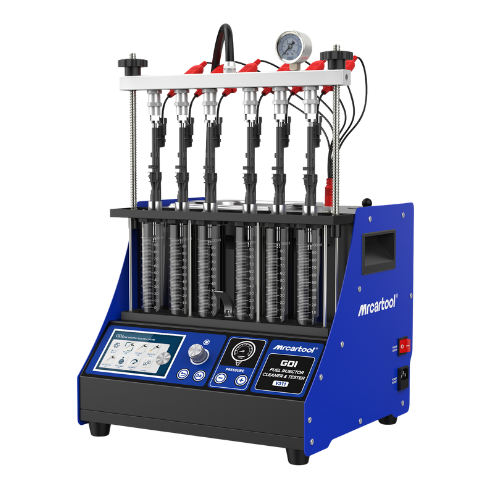
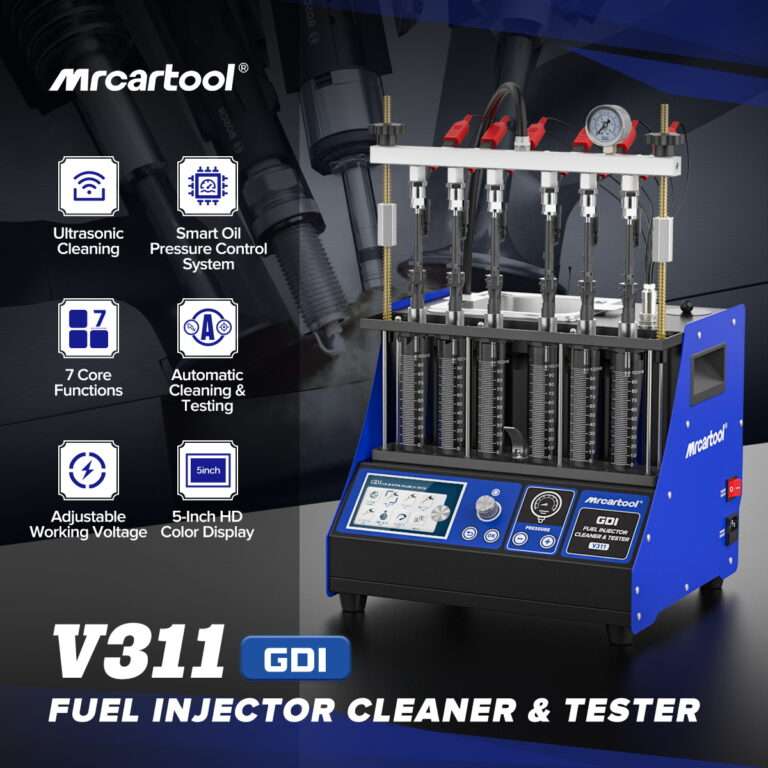
Why do mechanics use injector cleaner testers? (And yes, here comes the MRCARTOOL V-Series plug)
Let’s be honest—fuel additive can fix mild issues, but once an injector is seriously clogged, that little bottle is powerless.
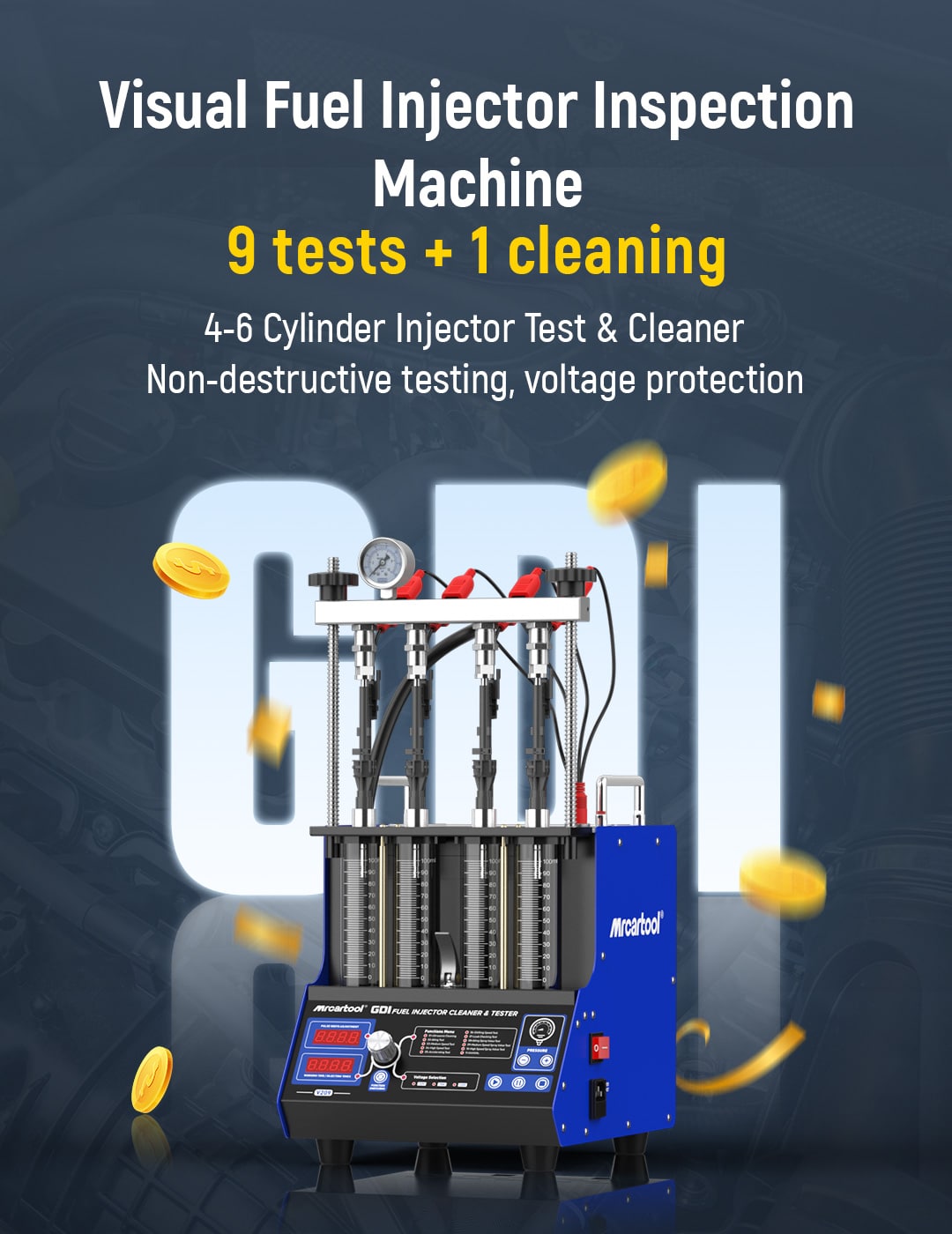
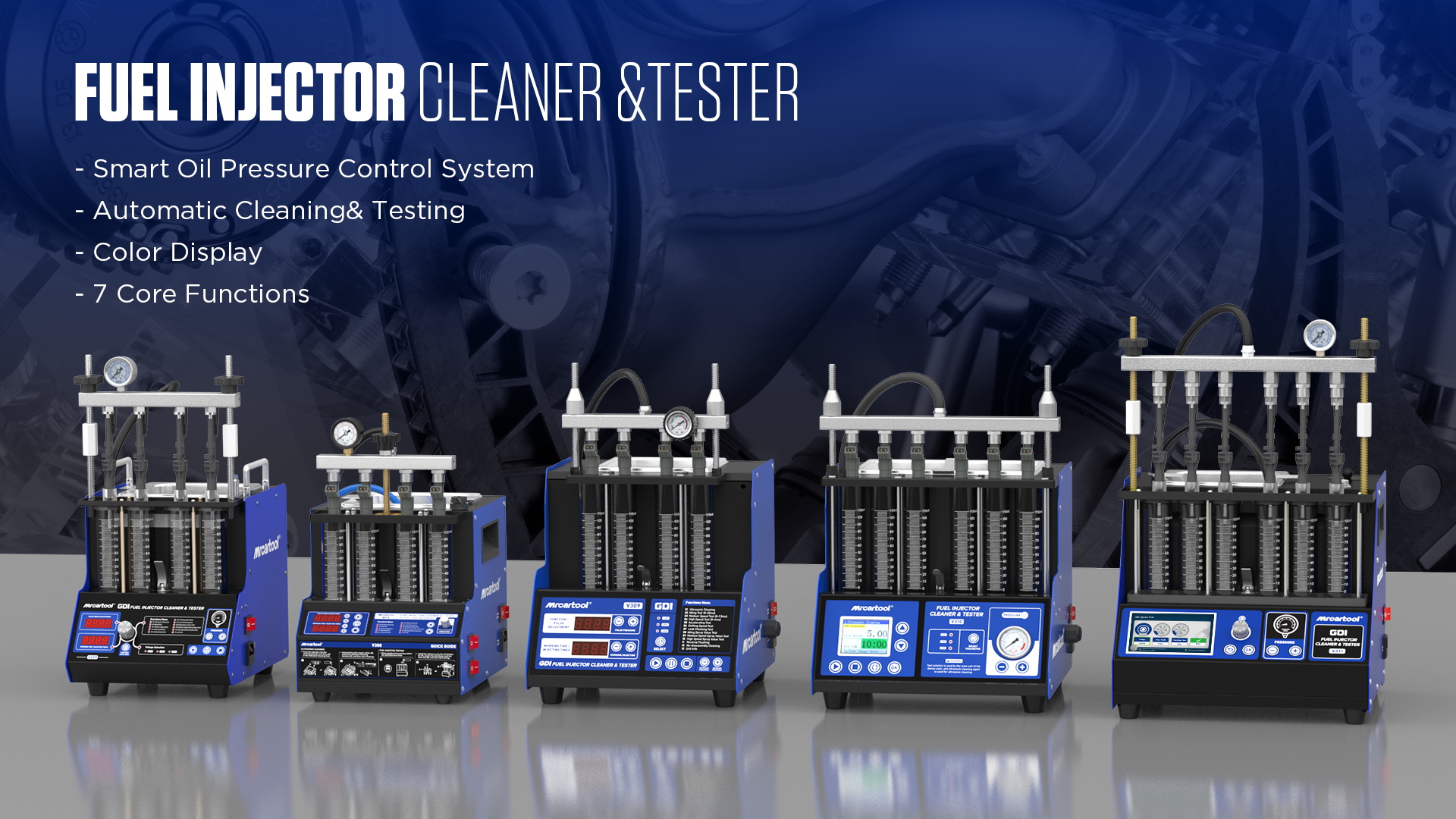
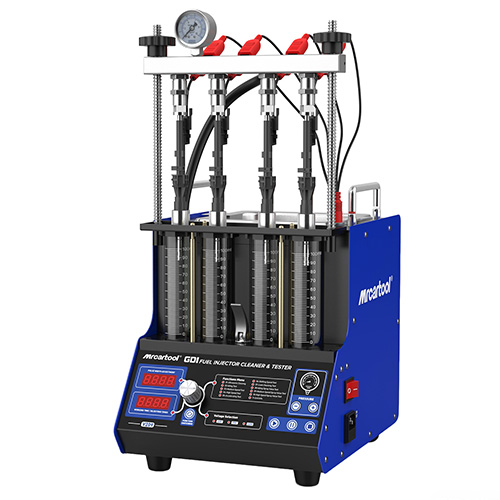
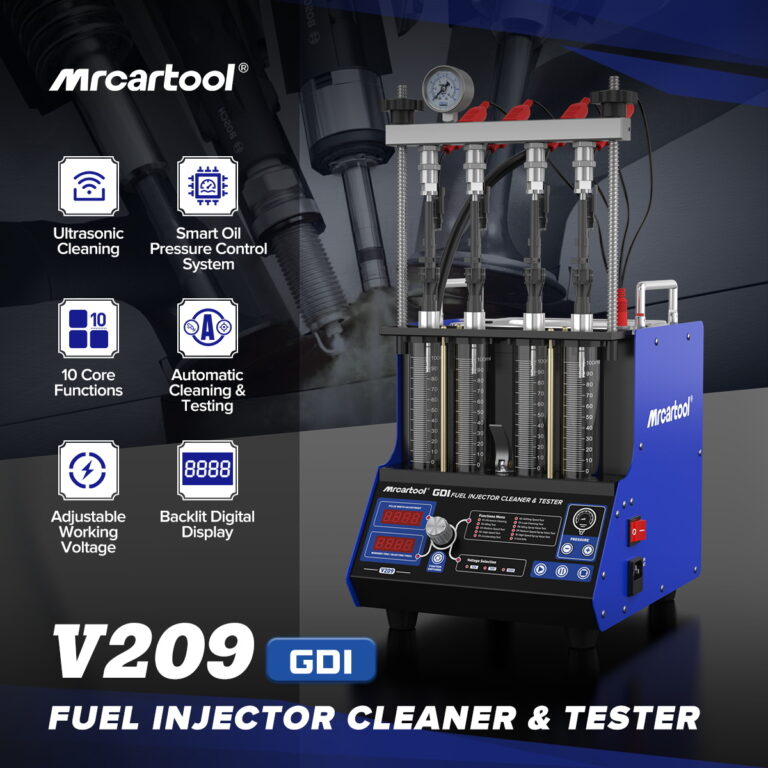
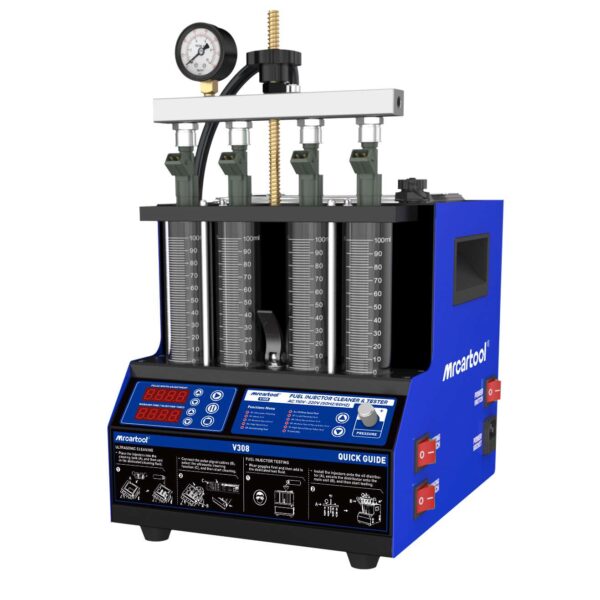
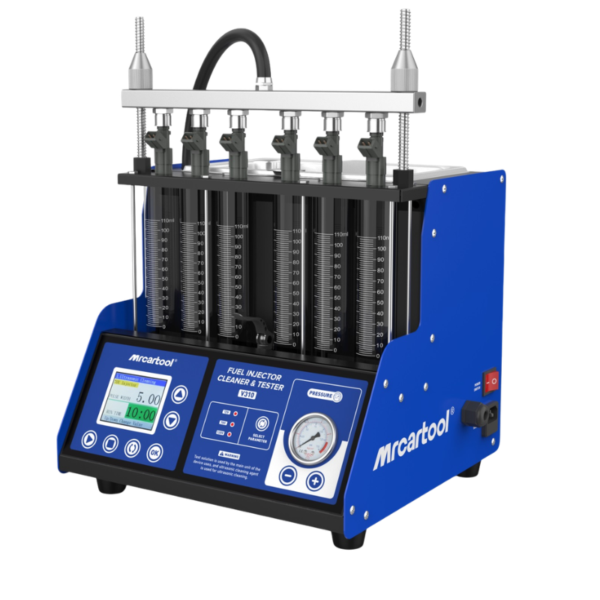
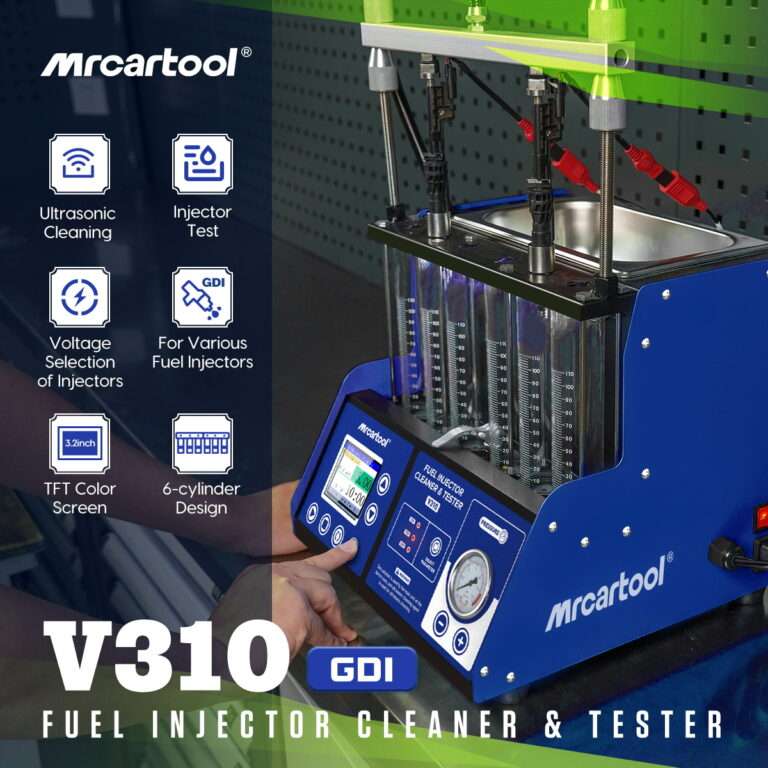
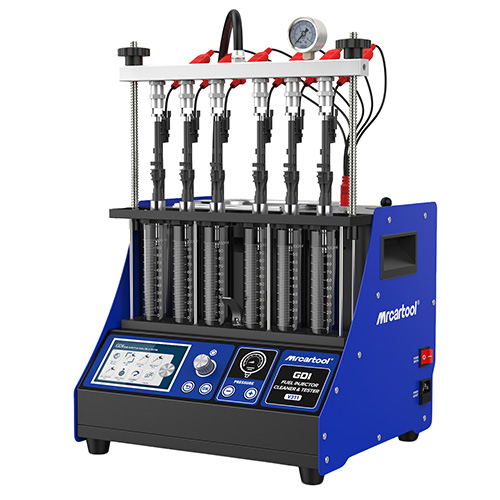
That’s when a real machine like the MRCARTOOL V-Series fuel injector cleaner tester comes in.
What can it do?
-
- Deep ultrasonic cleaning for heavy carbon buildup
- Simulated spray testing to compare injector flow
- Tells you whether an injector is dirty or actually failing
- Tests 4 or 6 injectors at once, super efficient
Simply put:
Additives handle the small stuff; machines fix the real problems.
If you’re a regular car owner, additives are fine occasionally.
But if you run a workshop? Not having an injector tester is like a chef without a pan—you just can’t do the job properly.