Why do Professional Repair Shops Need Fuel Injector Testing Capabilities?
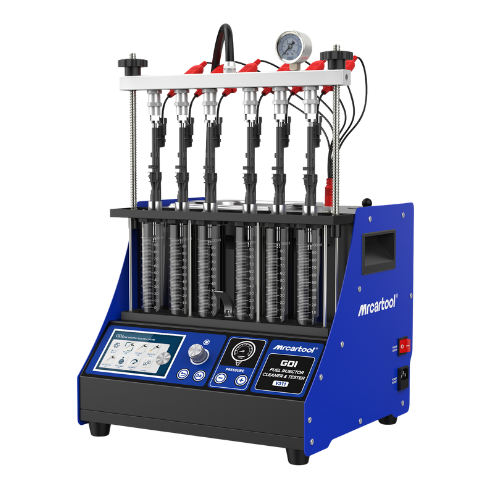
Because relying solely on code reading and experience cannot accurately distinguish between ignition issues, fuel pressure problems, and fuel delivery deviations. Many vehicles exhibiting idle shuddering, increased fuel consumption, or sluggish acceleration do not display code errors. Only through injector testing and cleaning equipment—which enables atomization observation, seal integrity testing, and flow rate comparison—can one confirm the presence of uneven fuel delivery, dripping, or blockages. This visual and quantifiable testing is crucial for enhancing diagnostic accuracy and reducing repair rework rates.
What’s the Difference Between Additives and Disassembly Cleaning?
Many car owners habitually use fuel additives to clean injectors, but additives can only partially improve minor carbon deposits and have limited effect on stubborn deposits or internal flow deviations that have already formed. Additives are an in-vehicle cleaning method that cannot detect whether fuel injection volume is balanced or determine if injectors are leaking. In contrast, removal and cleaning with professional equipment enables ultrasonic cleaning, pulse simulation testing, and flow comparison testing. This approach not only restores performance but also provides data-backed evidence. The core difference lies in whether the method possesses “diagnostic capability,” not merely “cleaning effect.”
When is a Flow Comparison Test Required?
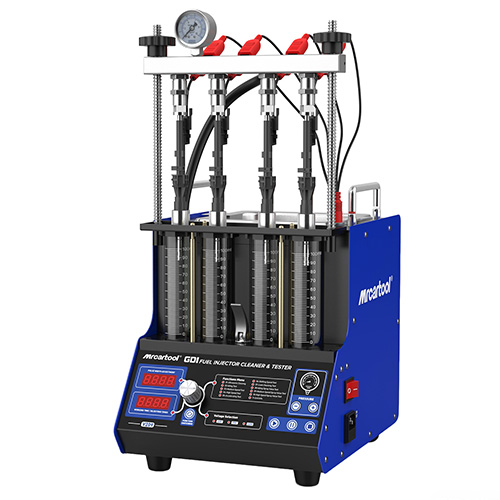
A four-cylinder or multi-cylinder flow comparison test should be conducted when the vehicle exhibits persistent vibration, cylinder-to-cylinder power imbalance, abnormal fuel consumption, excessive exhaust emissions, or after replacing a single fuel injector. While an individual injector may appear to function normally, if it exhibits significant flow discrepancies compared to others, the engine control unit can only compensate by adjusting injection timing. Prolonged operation under these conditions leads to reduced combustion efficiency and accelerated carbon buildup.
What Causes Uneven Flow Distribution Among 4 Cylinders?
The most direct manifestations of uneven flow distribution among four cylinders are idle vibration, jerky acceleration, and increased fuel consumption. It also causes fluctuations in crankshaft speed, affecting engine smoothness. For turbocharged or direct-injection engines, fuel injection consistency directly impacts power output and emission stability. Especially with increasingly stringent annual inspection emission standards, repair shops must possess this fundamental diagnostic capability.
Why is Injector Flow Variation More Dangerous than a Single Failure?
A single injector failure presents obvious symptoms and is easily detected. Flow rate deviations, however, often exist in a “suboptimal” state where the vehicle remains drivable. Yet uneven combustion causes excessive fuel in some cylinders and insufficient fuel in others. Excessive fuel increases carbon buildup and burdens the catalytic converter, while insufficient fuel may elevate combustion temperatures. Over time, this can damage valves, pistons, and even the exhaust system. Without professional diagnostic equipment, such issues are difficult to pinpoint accurately.
From a business structure perspective, if a repair shop already handles engine repairs, throttle body cleaning, intake system maintenance, or fuel system servicing, adding fuel injector testing and cleaning equipment can create a complete fuel system service loop. Compared to large specialized shops, small repair shops particularly need to enhance average transaction value and professional image by adding visual inspection services. Fuel injector testing serves not only as a technical tool but also as a value-added service, functioning as a standard procedure for diagnosing engine vibration and investigating abnormal fuel consumption.
Summary
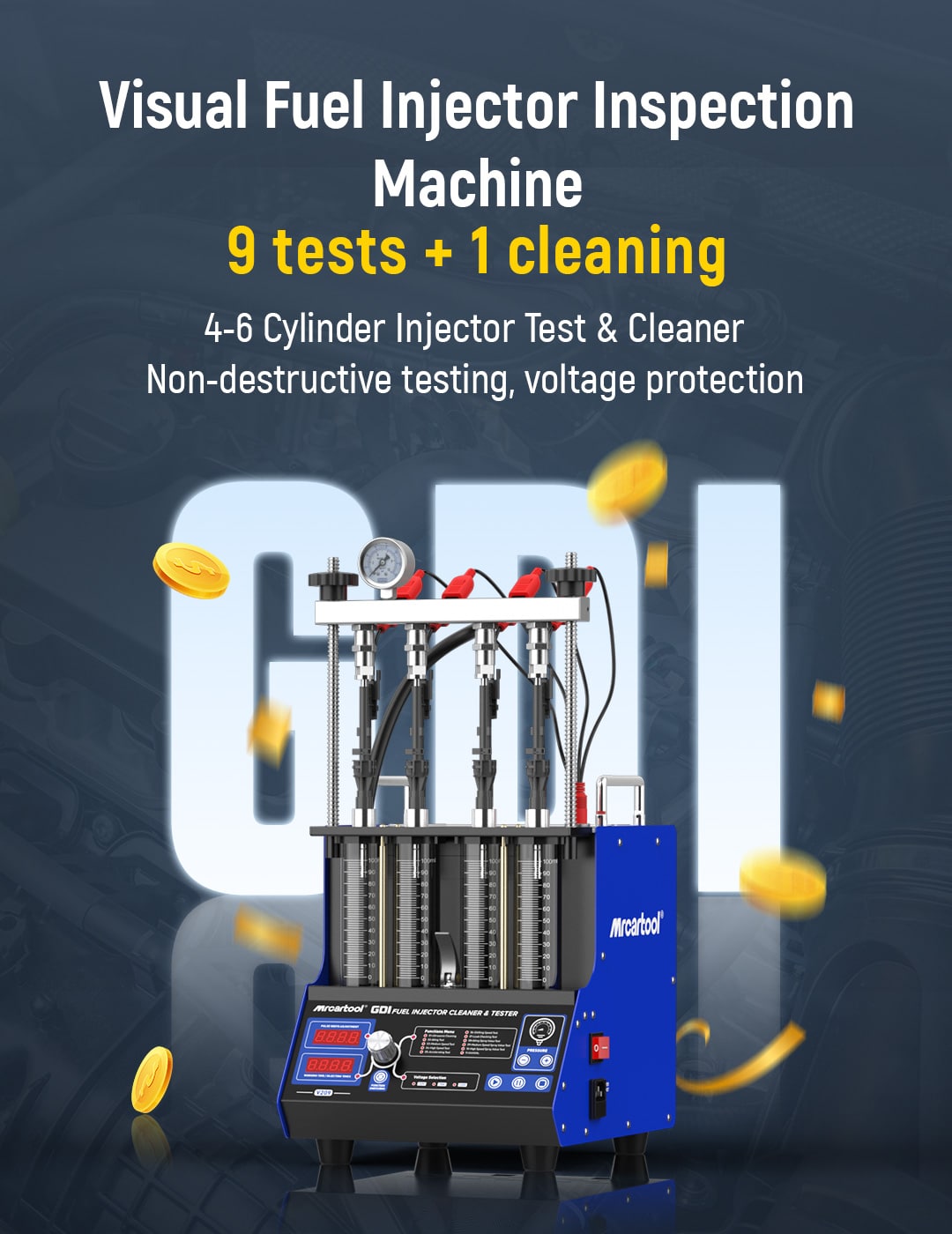
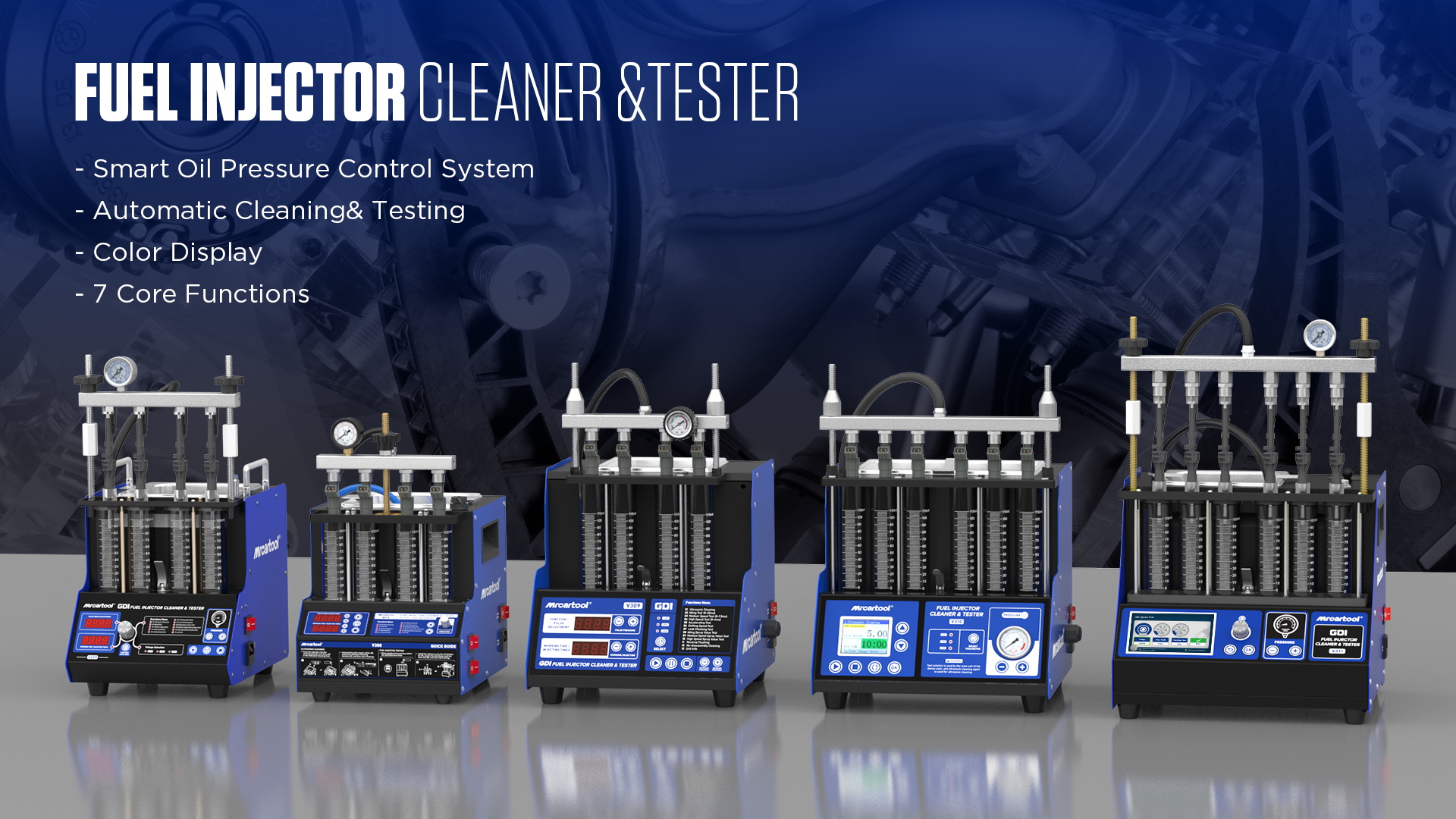
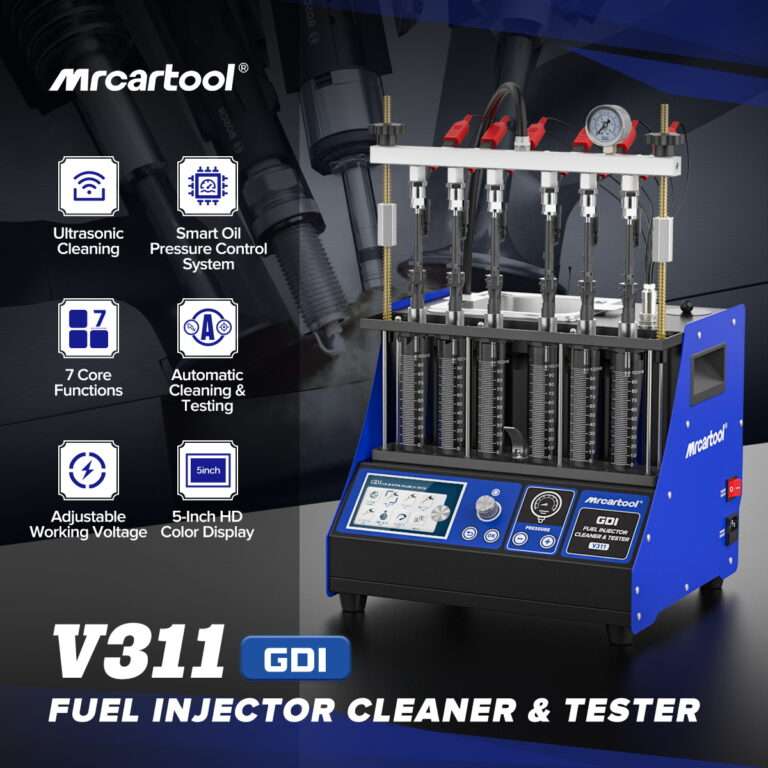
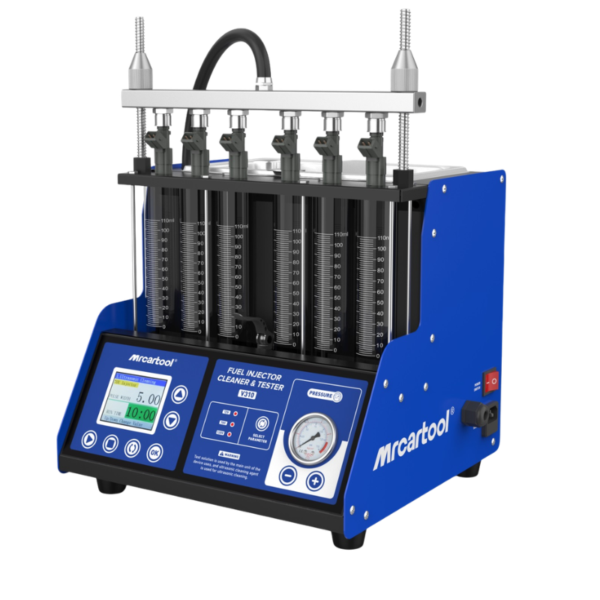
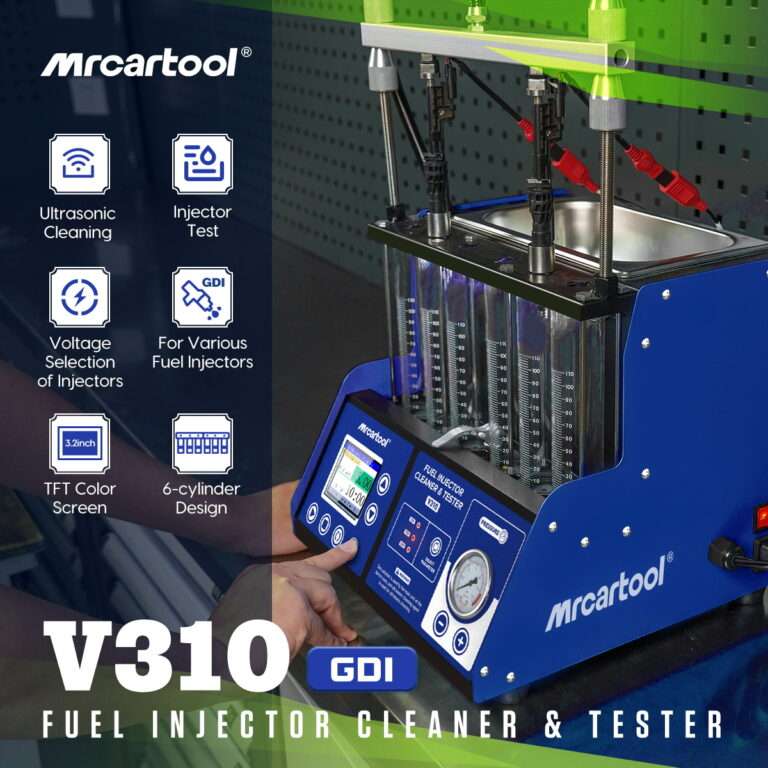
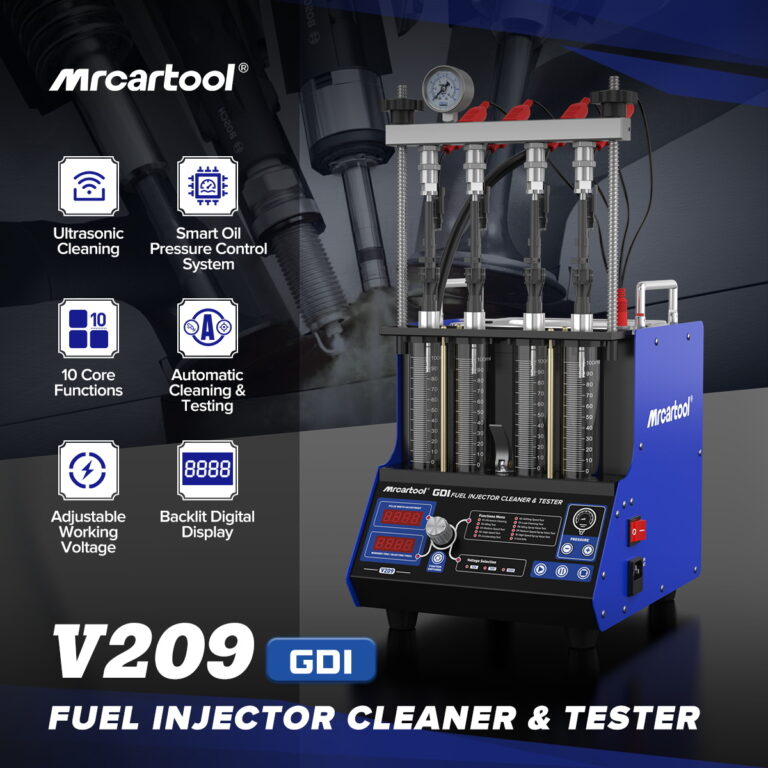
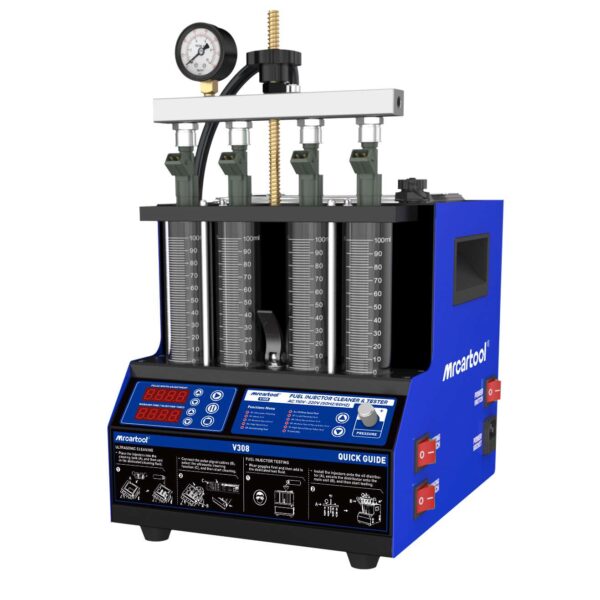
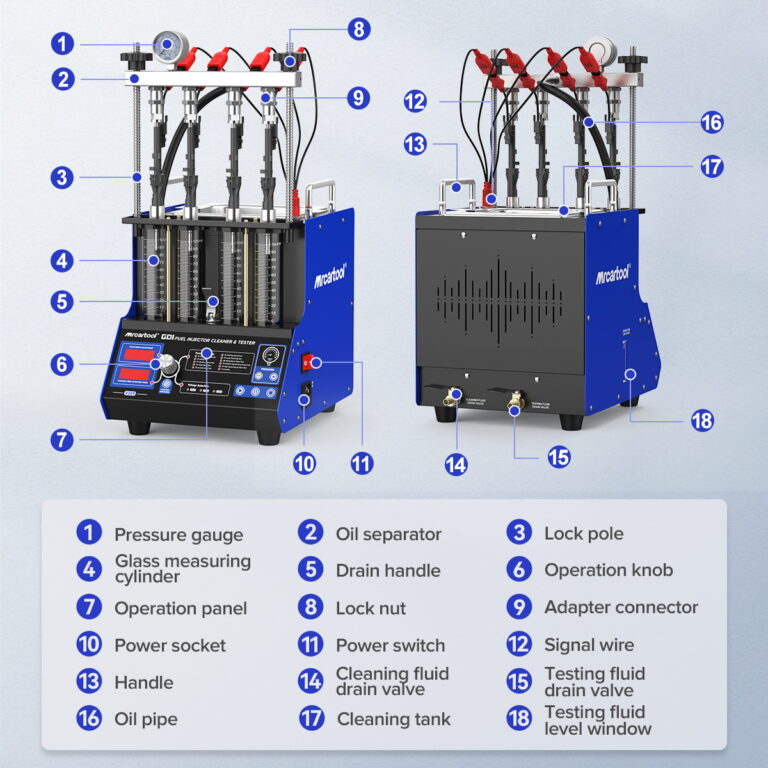
For repair shops specializing in engine maintenance, an injector testing and cleaning machine equipped with ultrasonic cleaning, pulse simulation, and flow comparison testing capabilities is not merely an equipment investment—it is a fundamental configuration that enhances diagnostic capabilities and service depth. As vehicle technology advances, fuel injection systems demand ever-greater precision. Those who can deliver data-driven diagnostics will gain a competitive edge.
📩 Contact Tina now for discounts and purchase inquiries!
Online customer service
Fuel Injector Cleaner Tester Machine Price
$469.00 Original price was: $469.00.$439.00Current price is: $439.00.
$8.00 – $60.00Price range: $8.00 through $60.00
Best Fuel Injector Cleaner Related blogs