





Auto Repair Knowledge
What Is The Difference Between Articulating Borescope And Normal Borescope?

Mar
What is a borescope?
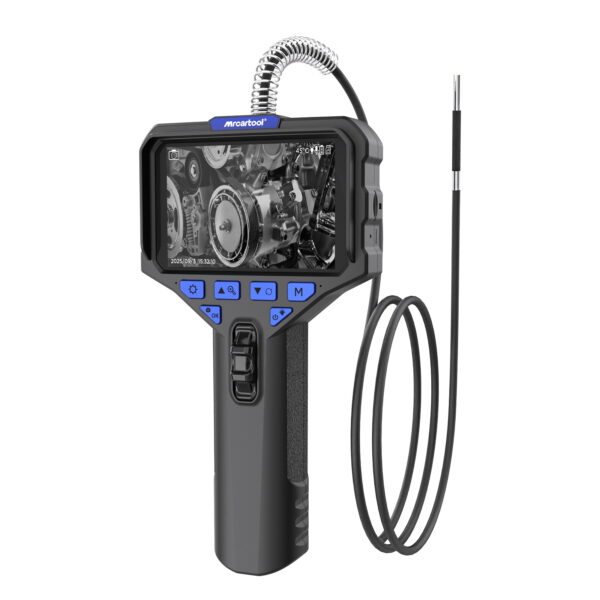
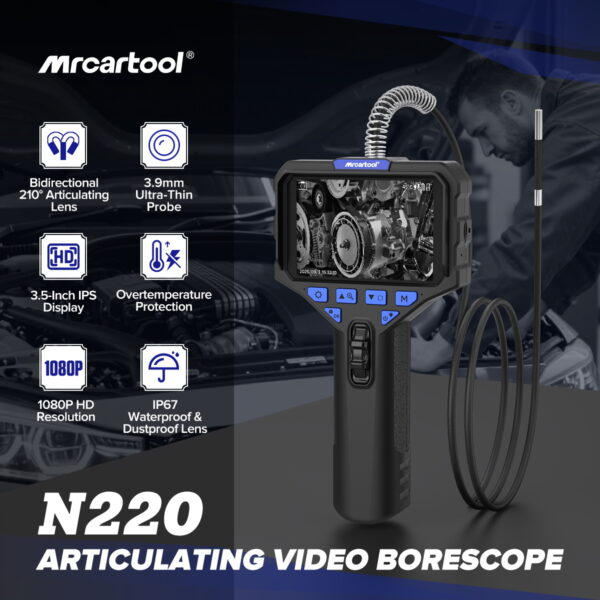
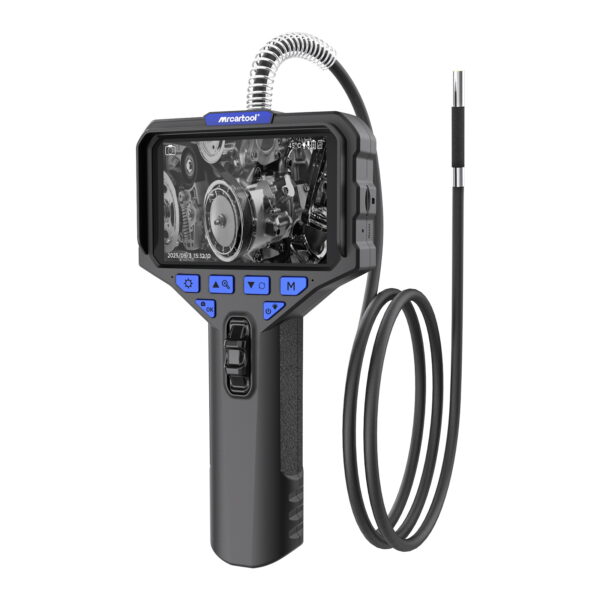
A borescope is a tool that uses a slim probe to enter narrow spaces and send real-time images to a screen. Most devices include an endoscope camera with light, which helps you see clearly in dark environments.
It usually consists of:
- A probe (with camera and lighting)
- A flexible or rigid tube
- A display device (screen or smartphone connection)
- A control system (for angle and brightness adjustment)
In simple terms, it works like an “eye” that can go deep inside small spaces. As a result, you can inspect internal conditions without taking things apart.
Main applications of borescopes
Borescopes are widely used in many industries. They help users inspect areas that are otherwise difficult to access.
Automotive repair
- Check carbon buildup inside engines
- Inspect cylinder wear
- Detect exhaust system blockages
An automotive borescope camera is especially useful in these tasks.
Industrial inspection
- Detect pipe corrosion and cracks
- Diagnose internal mechanical issues
In many cases, a flexible borescope camera makes inspection easier in tight or curved spaces.
Home maintenance
- Check clogged pipes
- Inspect wiring inside walls
Security and rescue
- Search for objects in confined spaces
- Perform post-disaster inspections
Differences between articulating and regular borescopes
This is the most common question. Let’s compare them from several key aspects.
Probe control
- Regular borescope: The probe is fixed. It moves straight forward, and you adjust direction by bending the cable manually.
- Articulating borescope: You can control the tip using buttons or a joystick. It can move up, down, left, and right, often up to 180° or more.
As a result, an articulating borescope offers much better flexibility and precision.
Ease of use
- Regular borescope: Easy to use and beginner-friendly
- Articulating borescope: Requires some practice, but offers more advanced functions
Viewing range
- Regular borescope: Limited viewing angle, which can create blind spots
- Articulating borescope: Adjustable viewing angle, almost no blind spots
Price
- Regular borescope: More affordable and suitable for basic tasks
- Flexible borescope camera: More expensive, but more professional
Use cases
- Regular borescope: Simple, straight inspections (such as pipes)
- Flexible borescope camera: Complex structures (such as engine interiors)
Which borescope is better for automotive repair?
If you mainly work on cars, you should choose an articulating borescope. There are several reasons for this.
First, engine structures are complex and full of curves. Second, you often need to inspect specific parts like valves or piston tops. Finally, a regular borescope cannot easily reach or aim at these areas.
In short, the more complex the structure is, the more you need an articulating borescope. However, for simple tasks like checking air ducts or door panels, a regular or flexible borescope camera is still enough.
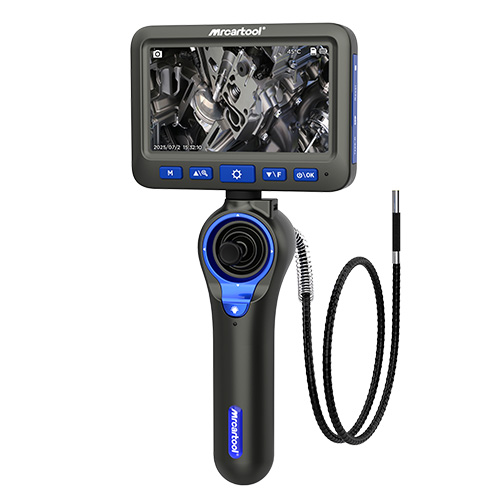
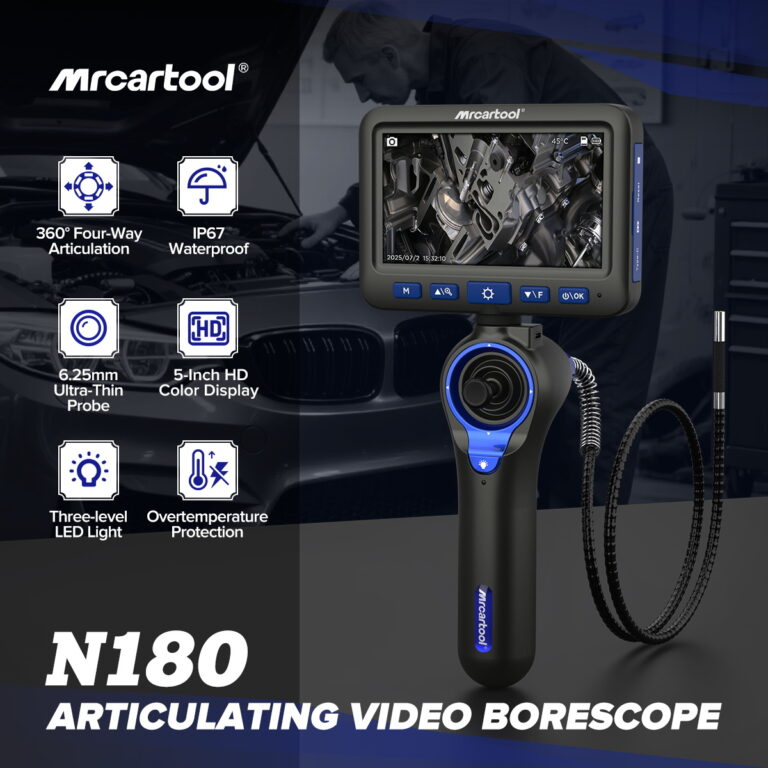
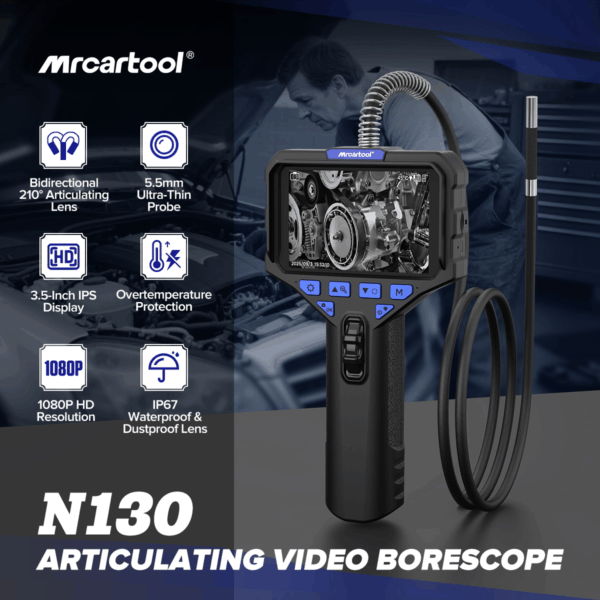
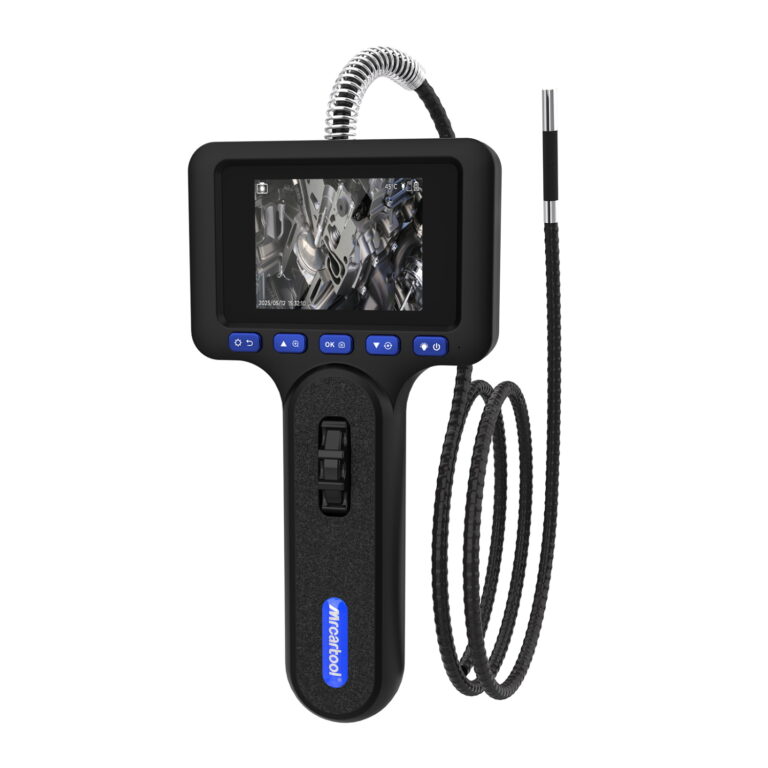
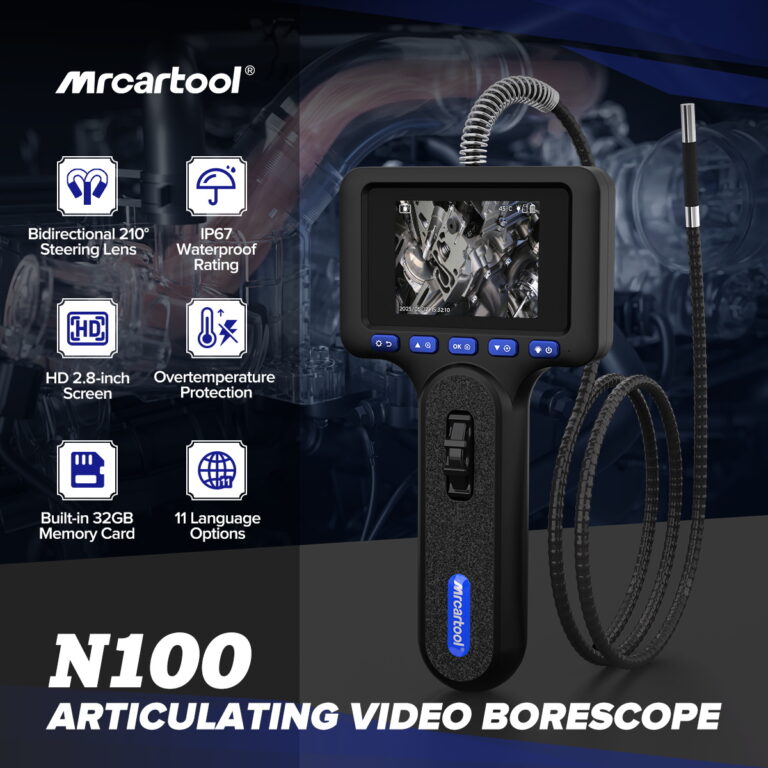
Recommendation: MRCARTOOL N180 Articulating Borescope
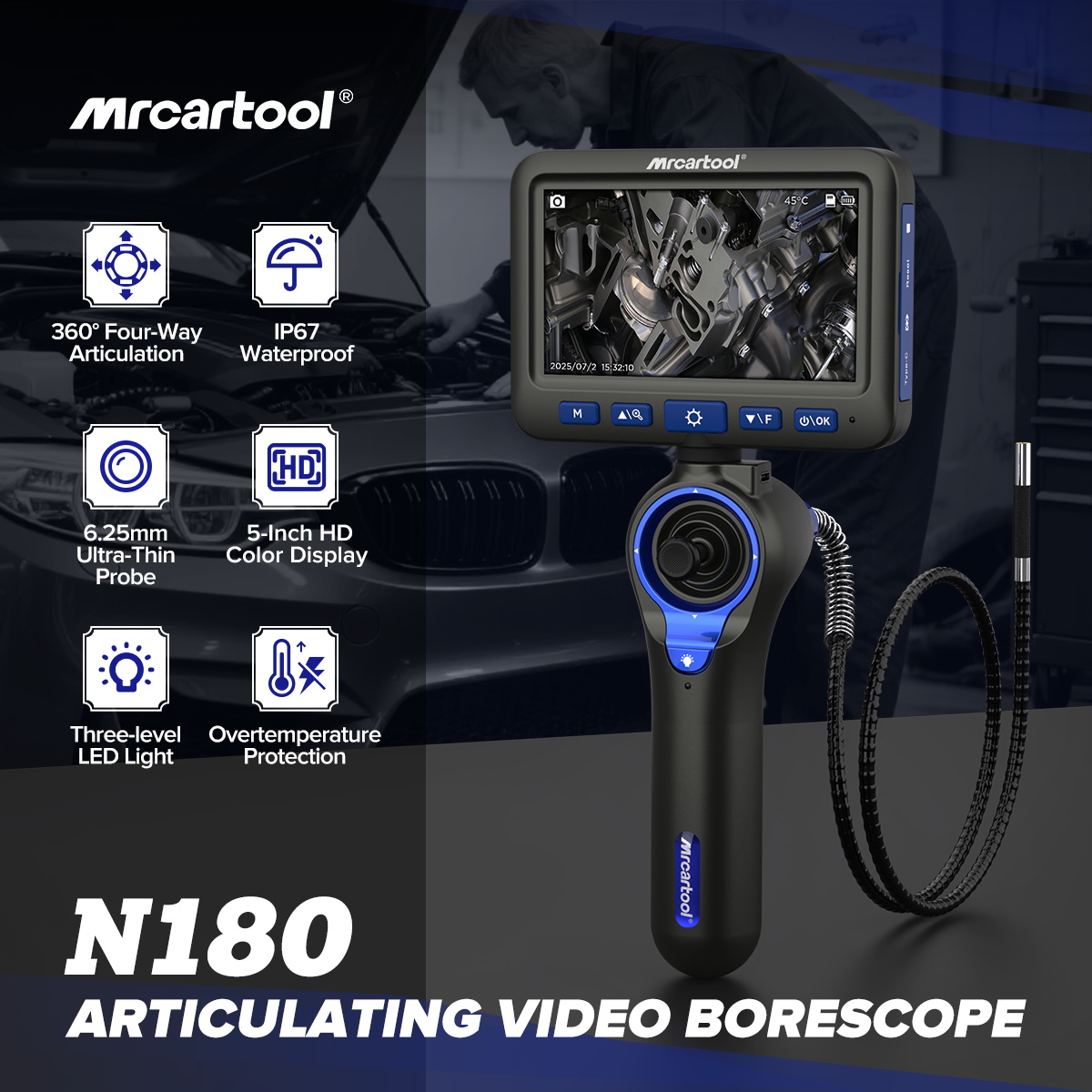
If you are looking for a reliable articulating borescope, the MRCARTOOL N180 Articulating Borescope is a great option. Among many brands, MRCARTOOL has built a strong reputation in the automotive repair field. In particular, this automotive borescope camera is designed for efficient and precise inspections. Next, I will highlight the key advantages of this endoscope camera with light.
- 4-way 360° articulation
Unlike standard 2-way models, the N180 Articulating Borescope supports full 4-way 360° control. You can move the probe freely in all directions.
This allows you to target specific areas such as valves, pistons, and cylinder walls. As a result, you can perform inspections with almost no blind spots. This feature is especially important for engine diagnostics.
- 5-inch large display
The N180 Automotive Borescope Camera comes with a 5-inch screen. It is larger than the typical 3.5-inch display.
Therefore, images look clearer and more detailed. It also makes long inspection sessions more comfortable.
- 6.25mm slim probe
The slim probe can easily enter tight areas like spark plug holes and injector ports.
It has a working range of about 15–100 mm. This makes it ideal for engine inspections.
- 8x zoom with HD imaging
Compared to standard 4x models, the N180 offers higher magnification.
This helps you see fine wear, carbon buildup, and scratches more clearly.
- Industrial-grade protection
The device is IP67 waterproof and oil-resistant. It also features a high-temperature alarm (above 80°C).
Because of this, it works reliably even in oil or coolant environments.
- Multi-device connectivity and storage
The device can connect to smartphones (on supported systems). It also includes built-in storage, such as 32GB.
You can take photos and record videos ب. This is useful for reports and customer communication.
If you work in automotive repair, the N180 is not just a replacement. It is a true upgrade to your inspection tools.
Conclusion
In summary, borescopes are powerful tools that improve inspection efficiency. Regular models work well for simple, straight tasks. However, articulating borescopes perform much better in complex environments.
For automotive work, an automotive borescope camera with articulation is highly recommended. If you want to reduce disassembly, see more details, and work more efficiently, investing in an articulating borescope is a smart choice.