






Repair Tools
What Are Common Injector Tester Problems? – Car Injector Tester
Feb
When using an Car Injector Tester for the first time, many technicians wonder: Can this equipment truly help quickly and accurately assess injector condition while boosting repair efficiency? For auto repair shops, injector inspection and cleaning are no longer optional tasks—they’re essential components of routine maintenance and fault diagnosis.
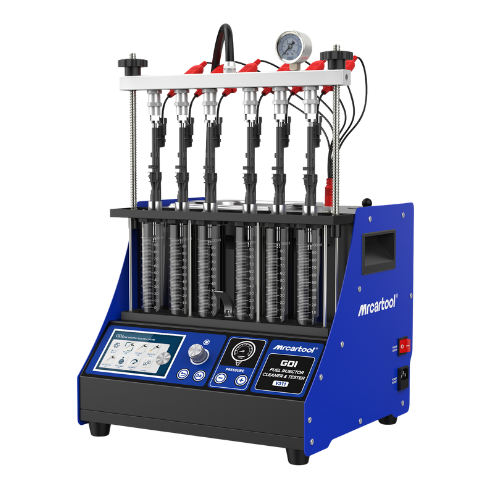
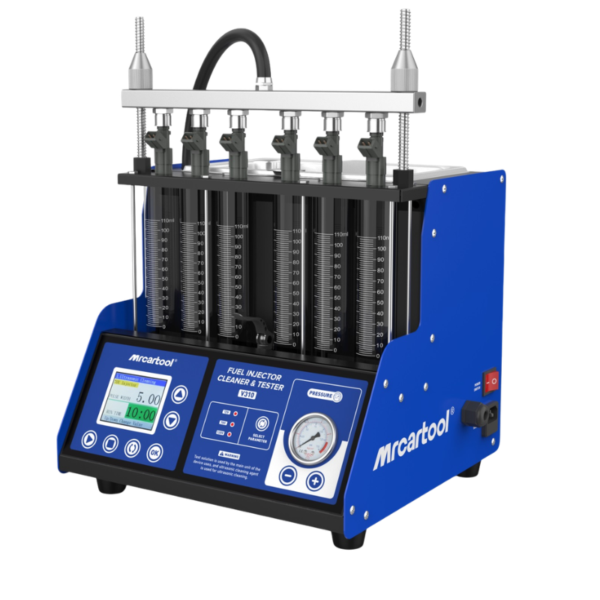
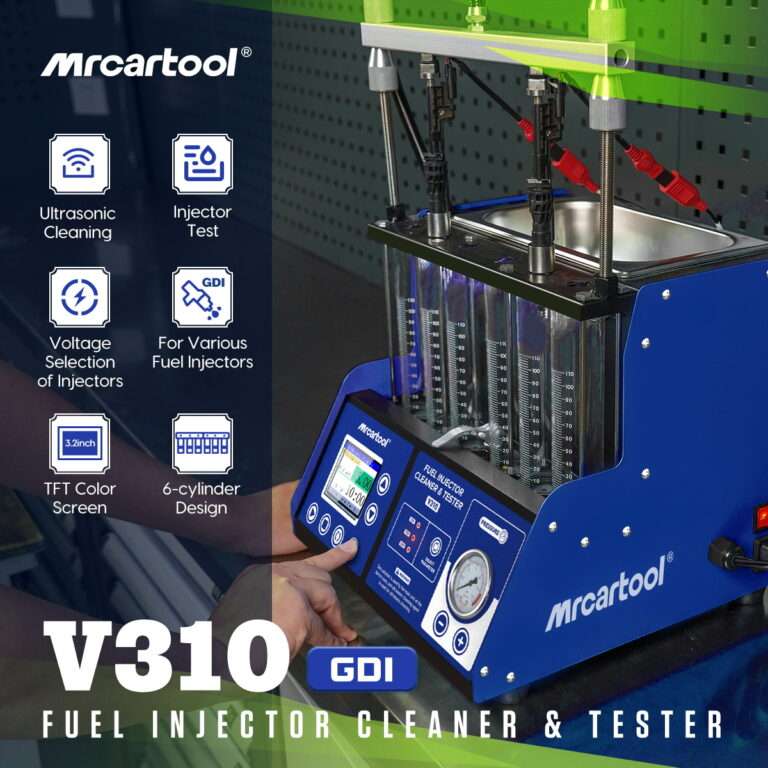
This article provides a professional analysis of the actual experience, operational procedures, and application value when first using the MRCARTOOL V311 Injector Cleaning Machine. It aims to help repair shops conduct injector inspection and maintenance work more efficiently.
1.Function and Principle of Car Injector Tester
Fuel injectors are responsible for precisely atomizing and injecting fuel into the combustion chamber. As mileage increases, carbon deposits or gummy residues tend to form inside the injectors, commonly manifesting as:
-
- Unstable idle
- Difficult cold starts
- Hesitant acceleration
- Increased fuel consumption
- Abnormal emissions
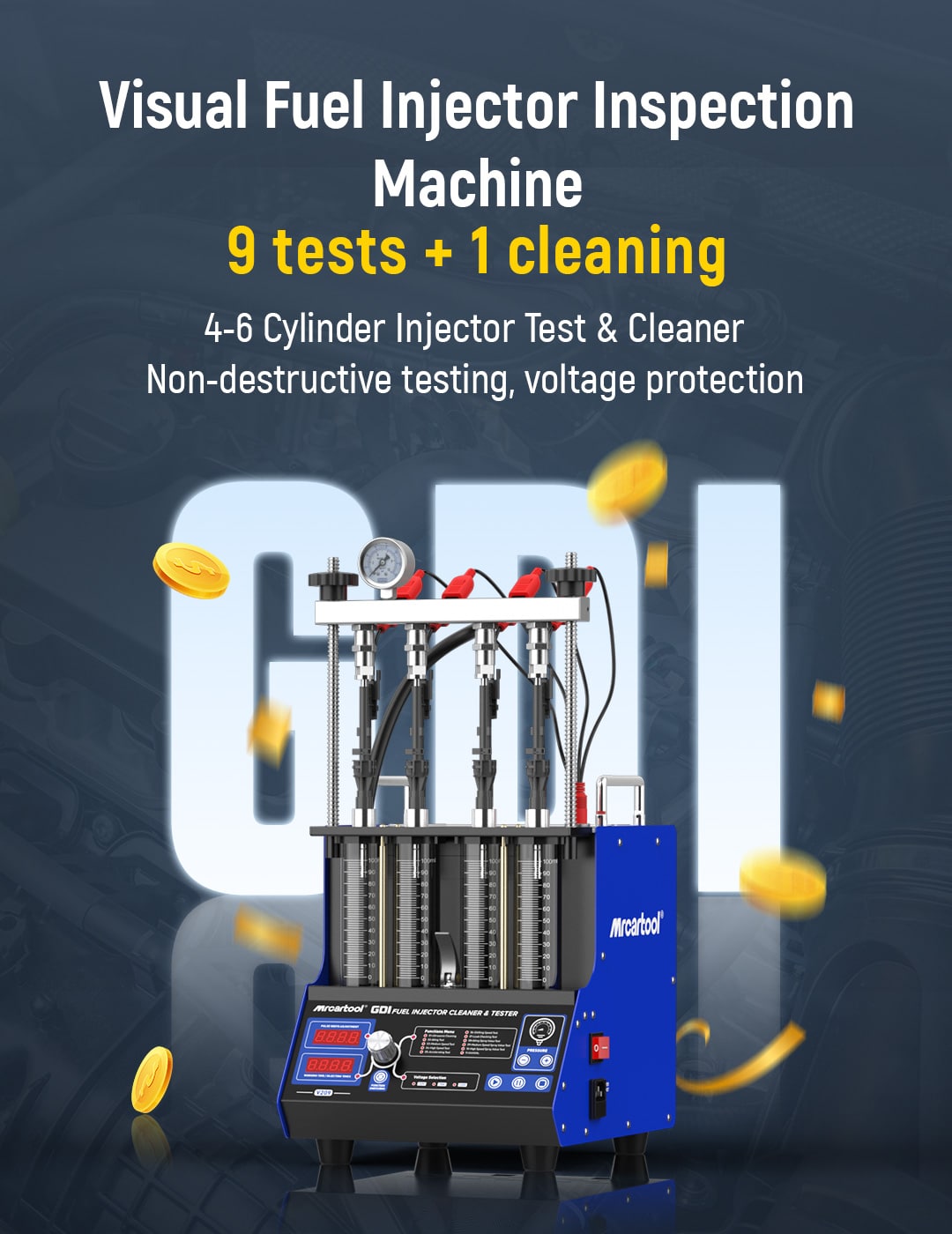
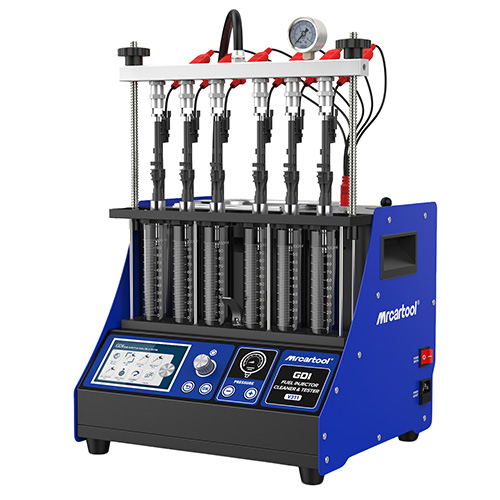
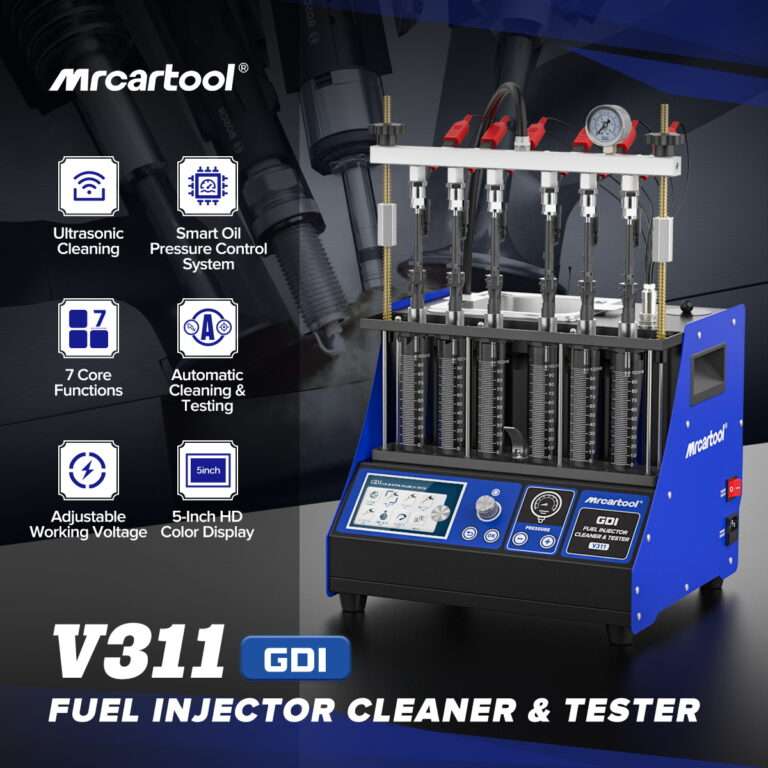
The MRCARTOOL V311, an integrated testing and cleaning device, simulates ECU control signals to activate injectors. Combined with specialized cleaning fluid, it performs the following tests under visual conditions:
-
- Fuel injection volume testing
- Spray pattern comparison
- Seal integrity test (drip test)
- Uniformity comparison
- Dynamic injection test
By comparing the injection status and flow variations across cylinders, technicians can visually identify issues such as clogging, dripping, or uneven fuel delivery.
2. How To Test A Injector ?
For technicians encountering the equipment for the first time, the operating procedure is straightforward but requires adherence to standardized steps.
1. Equipment Preparation
-
- Verify cleaning solution is filled to the appropriate level
- Connect power supply and verify stable voltage
- Select appropriate connectors and adapters based on injector model
2. Install Injectors
-
- Secure injectors onto test rail
- Ensure seals are intact to prevent leakage during testing
- Connect injector control wiring harness
3. Select Test Mode
Choose based on repair requirements:
-
- Static Injection Test
- Dynamic pulse test
- Seal integrity check
- Ultrasonic cleaning (if equipped)
4. Observe and record data Focus on:
-
- Consistency of spray patterns across all injectors
- Variations in fuel volume calibration
- Presence of dripping or leakage
- Uniformity of atomized spray
If any injector shows significant deviation, perform individual cleaning or recommend replacement.
3. Common Problem Types in Initial Diagnostics
In practical workshop applications, the V311 typically aids in identifying the following faults:
Partial fuel injector blockage
-
- Low fuel injection volume, with a linear or bifurcated spray pattern.
Fuel nozzle dripping
-
- Fuel leakage persists after injection stops, affecting the fuel-air mixture ratio.
Uneven fuel injection
-
- Significant variation in fuel delivery across cylinders, potentially causing engine vibration.
Abnormal electromagnetic response
-
- Delayed opening or closing of the fuel nozzle, impacting combustion efficiency.
- By conducting comparative tests before and after cleaning, technicians can clearly demonstrate repair results to customers, enhancing service transparency and trust.
4. Daily Equipment Maintenance Recommendations
To ensure long-term stable operation of the equipment, workshops are advised to:
-
- Drain residual cleaning solution after each use
- Clean test lines and oil cups
- Periodically inspect seals and connectors
- Keep electrical interfaces dry
Proper maintenance not only extends equipment lifespan but also ensures the accuracy of test data.
5. Fuel Injector Tester Price
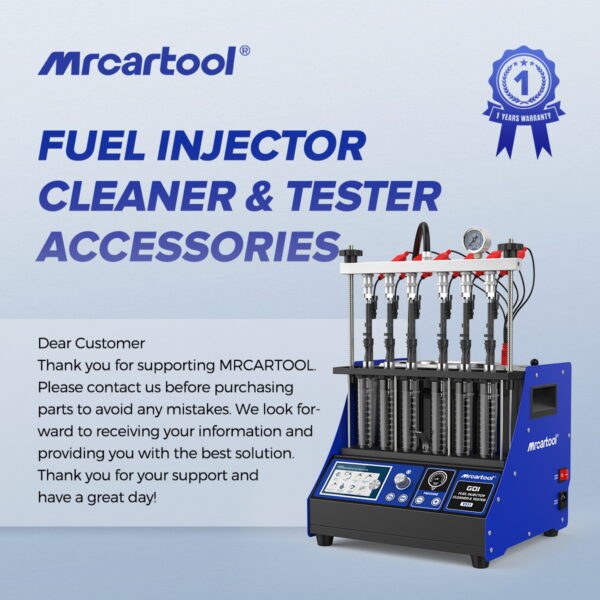
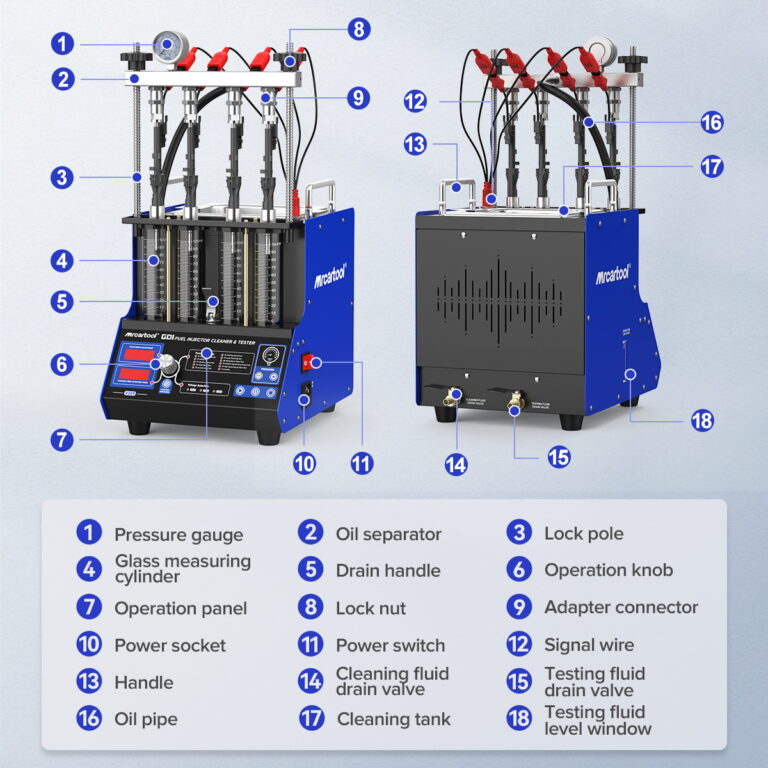
6. Repair Decision: Clean or Replace?
Test results typically guide repair recommendations:
✔ Mild clogging
Recommend ultrasonic cleaning followed by retesting.
✔ Fuel injection volume restored to normal
Can continue use.
✔ Persistent abnormalities after cleaning
Recommend replacing the injector and documenting data as repair justification.
For repair shops, visual data and comparative results effectively reduce customer skepticism and increase quote acceptance rates.
7. Why Do Repair Shops Need Car Injector Tester?
For professional repair shops, equipping fuel injector testing and cleaning equipment offers the following advantages:
-
- Enhances diagnostic accuracy and reduces misdiagnosis
- Adds high-value-added service offerings
- Improves repair transparency
- Strengthens customer trust
- Boosts overall repair efficiency
In today’s fiercely competitive automotive repair market, sophisticated testing capabilities often serve as a key differentiator for workshops.
8.Conclusion
The condition of fuel injectors directly impacts engine performance and fuel economy. By utilizing the MRCARTOOL V311 injector cleaning machine, technicians can more efficiently perform injector inspection and cleaning tasks, reduce rework rates, and provide customers with more professional, visual repair solutions.
For automotive repair shops pursuing standardized operations and a professional image, injector inspection and cleaning equipment has become an essential tool for enhancing technical capabilities and profitability.
📩 Contact Winnie now for discounts and purchase inquiries!
- WhatsApp: +86 189 2376 8146
- Email: seller@mrcartool.net
